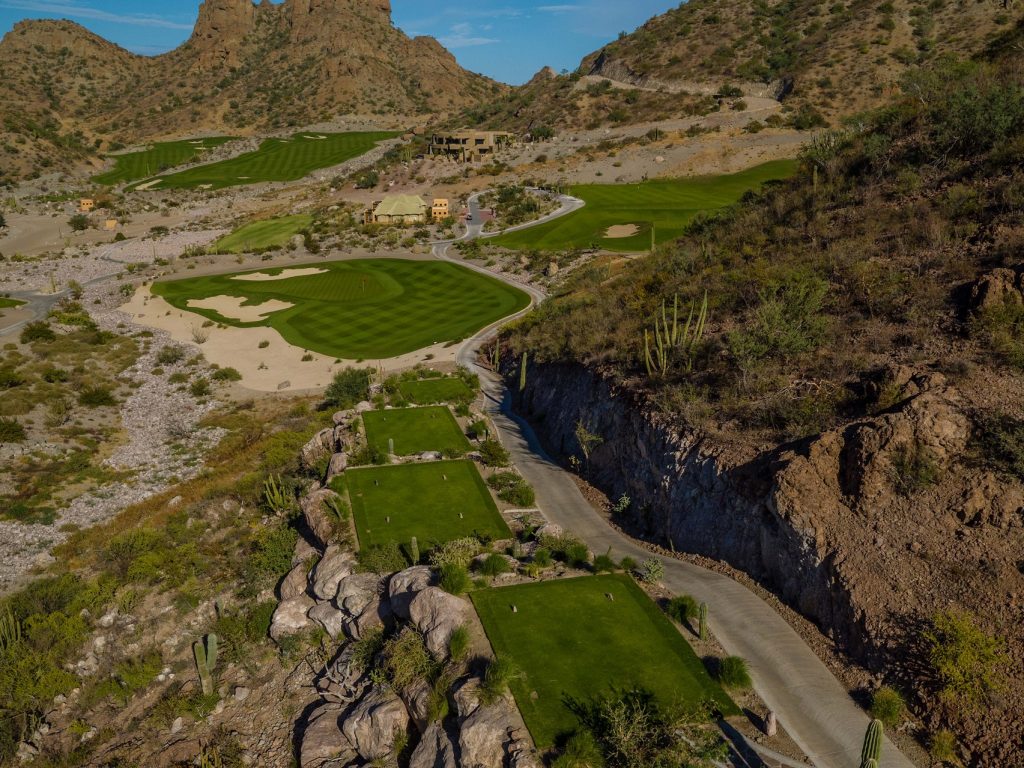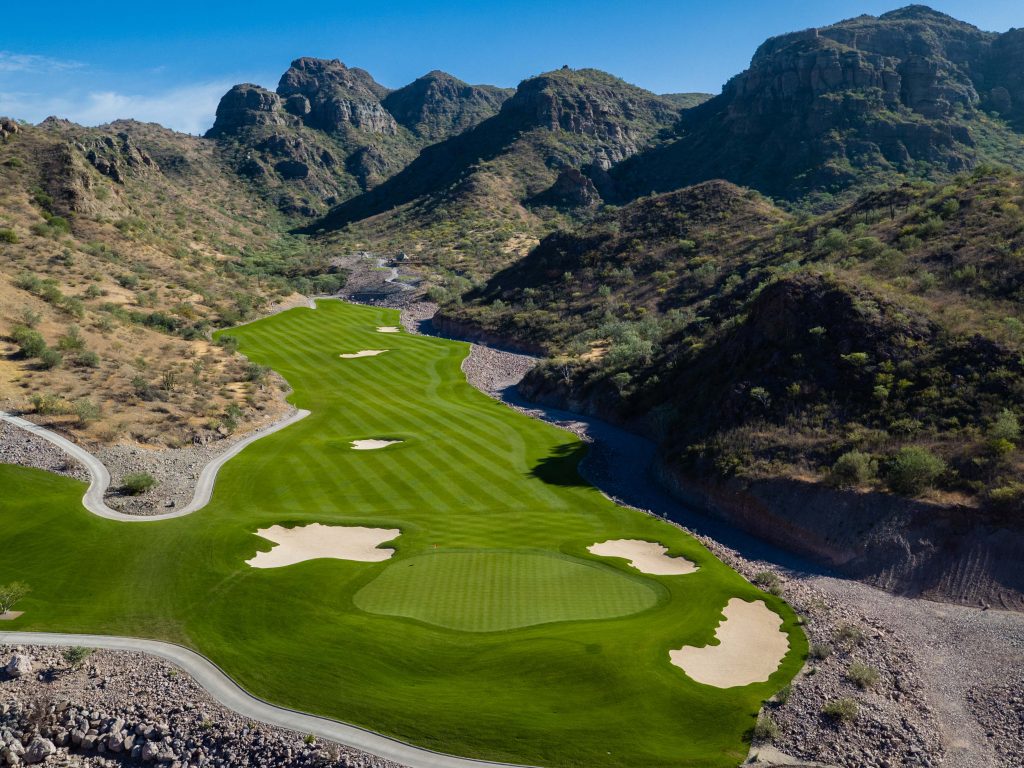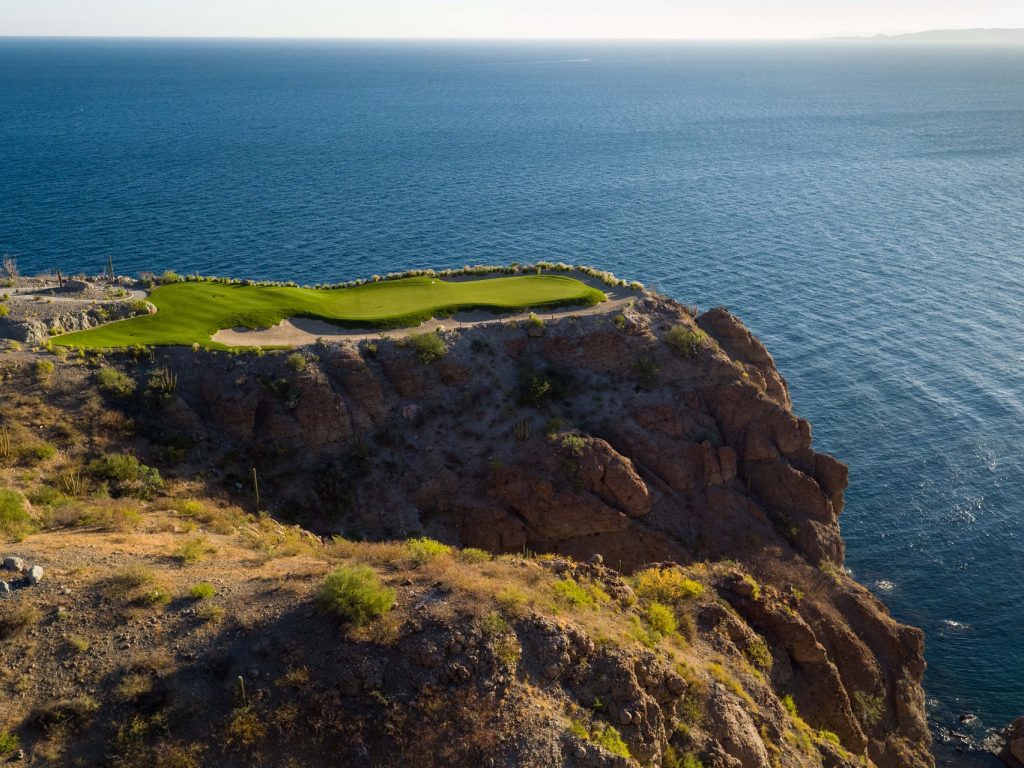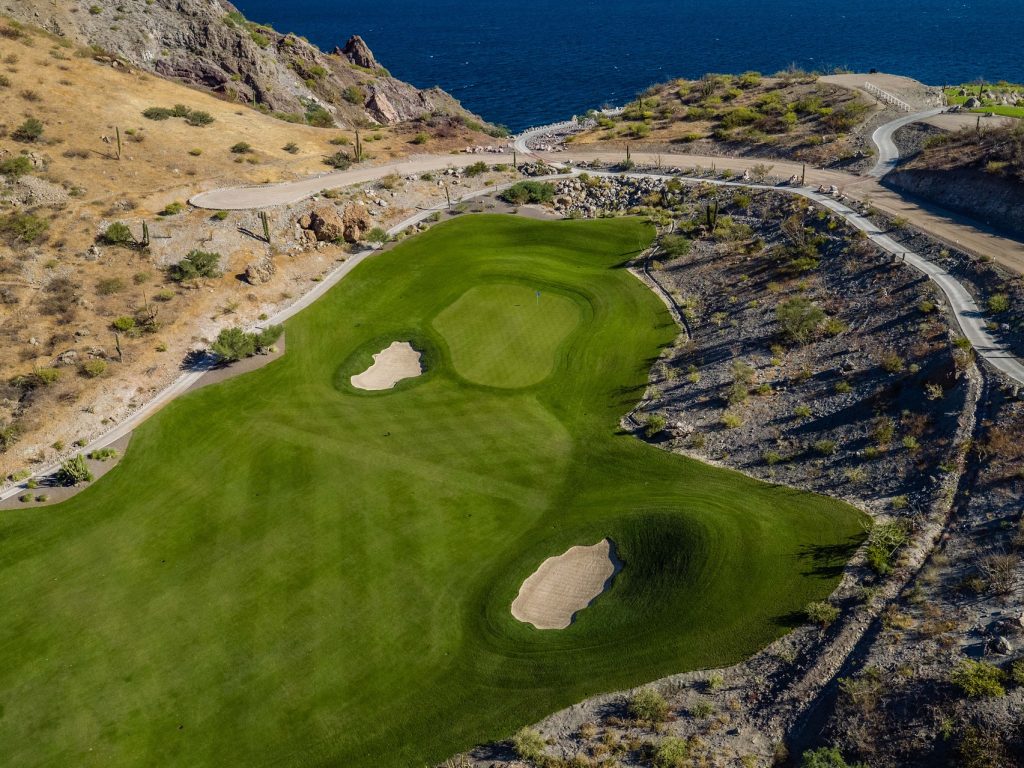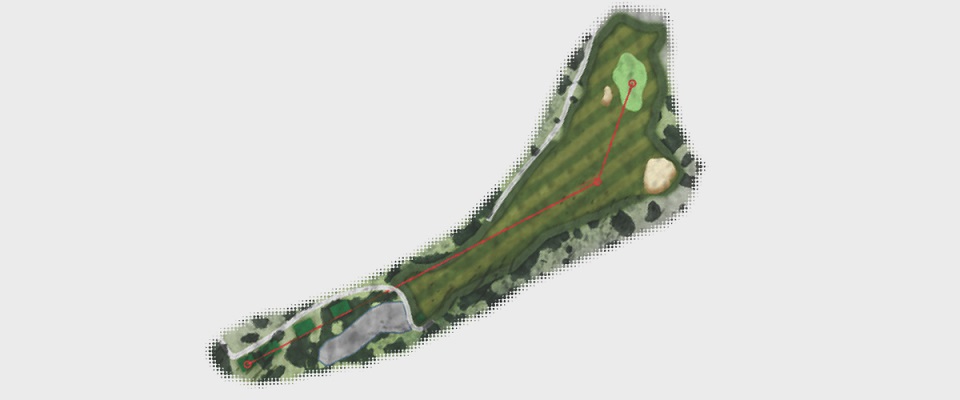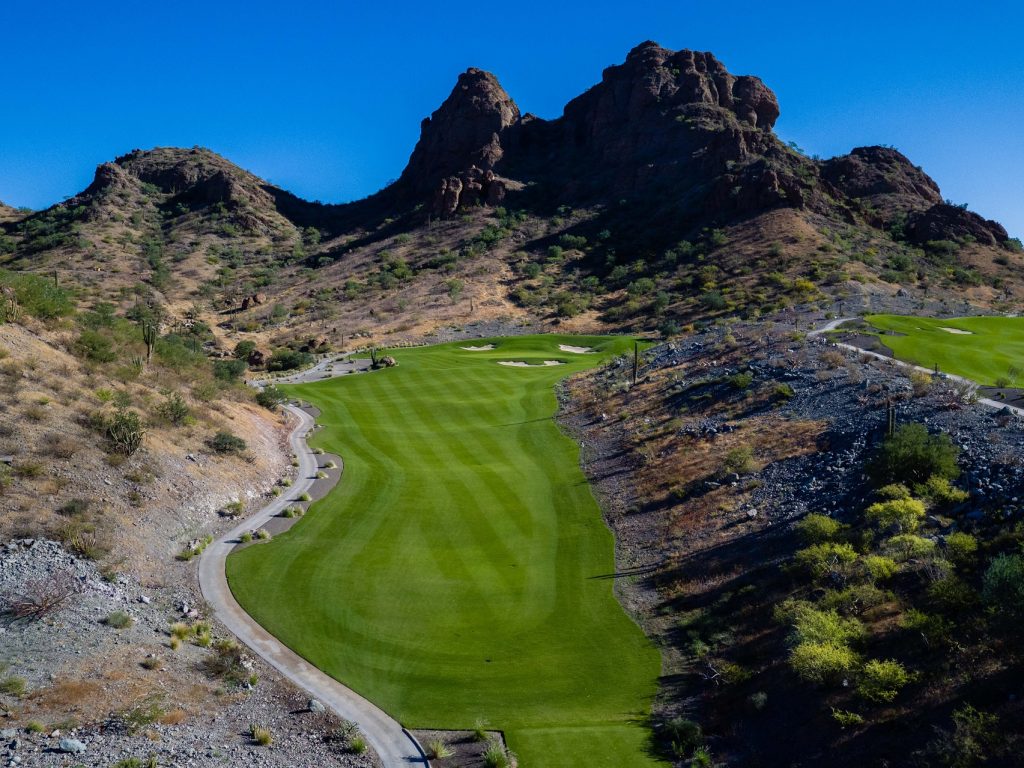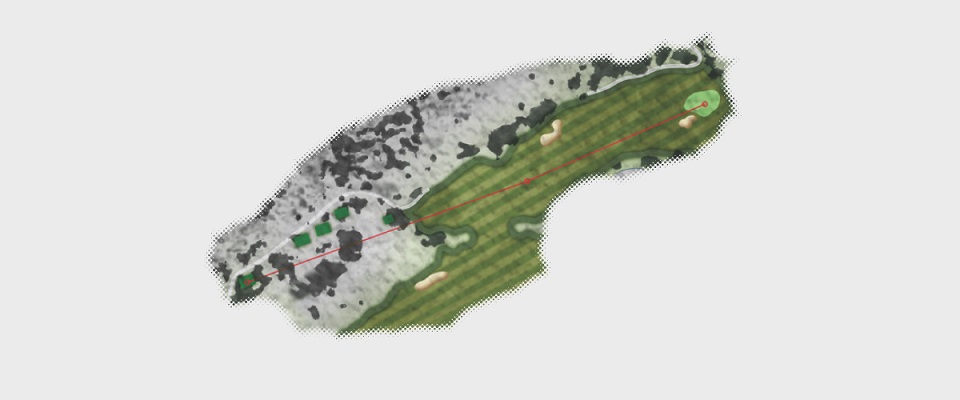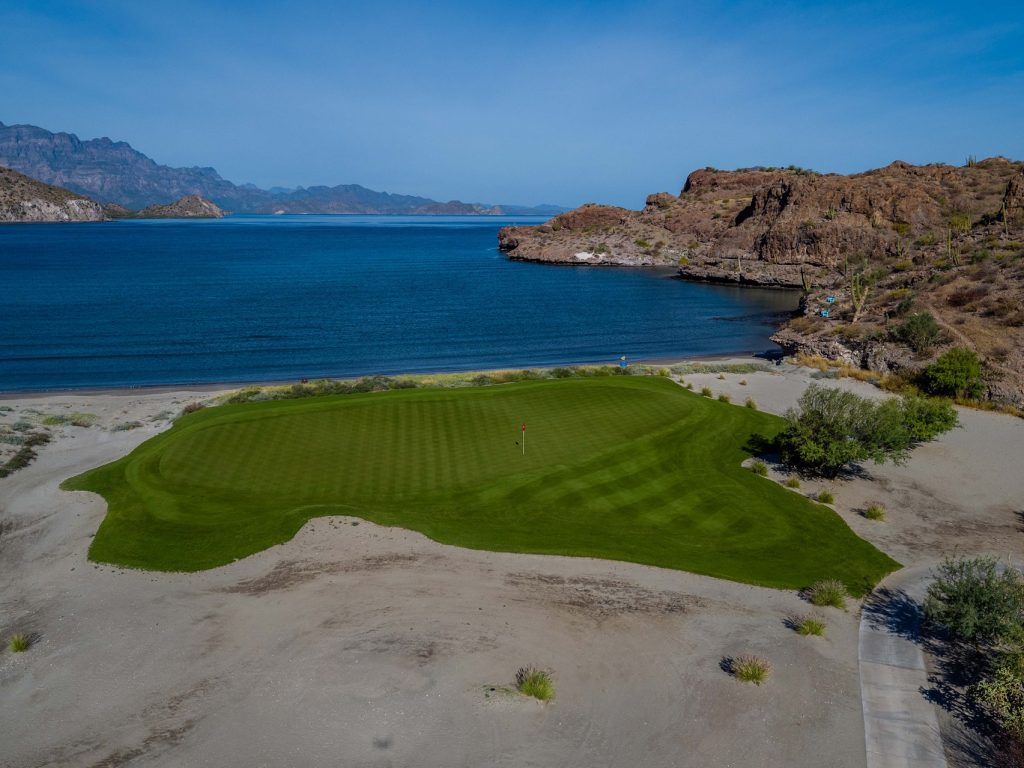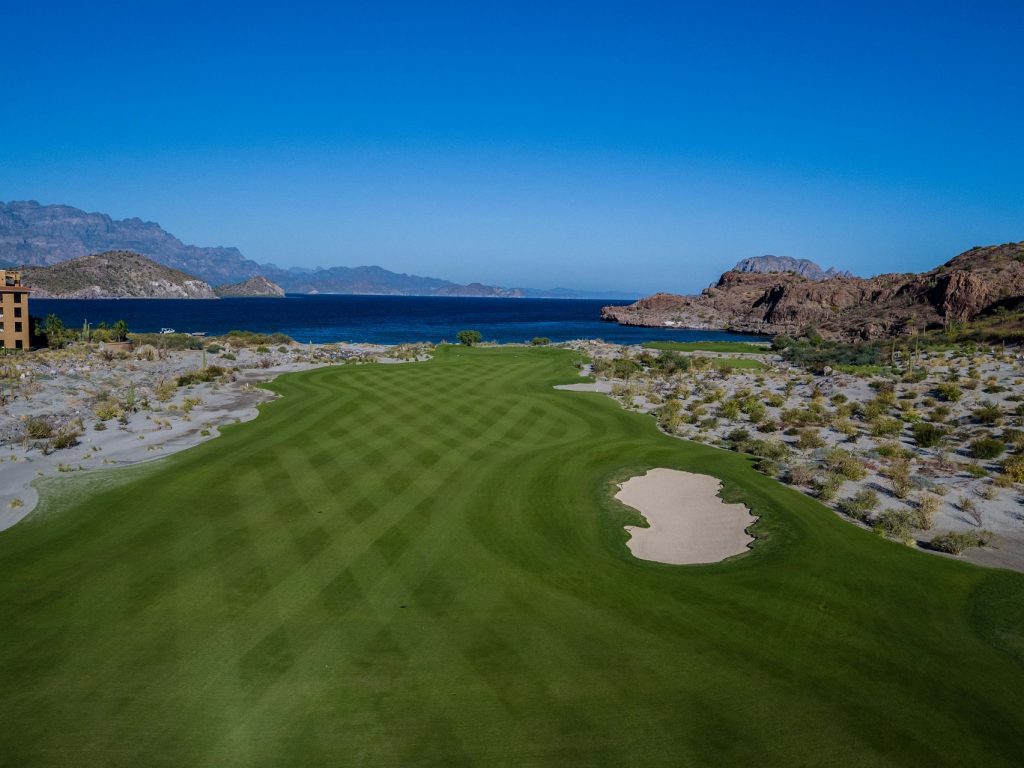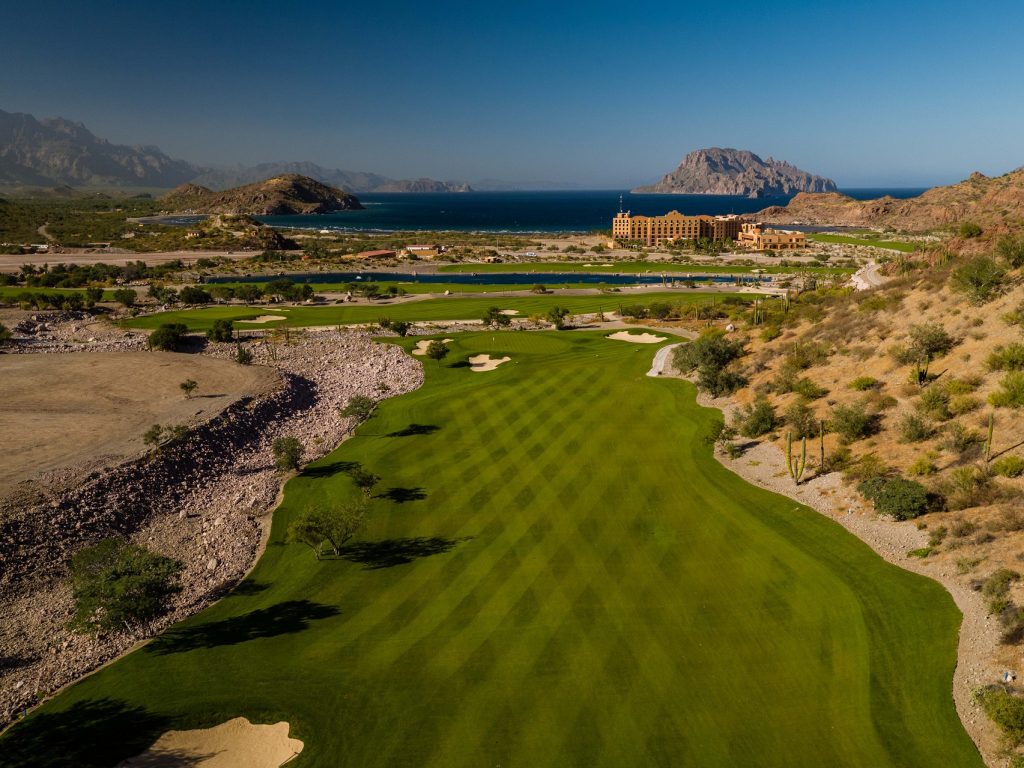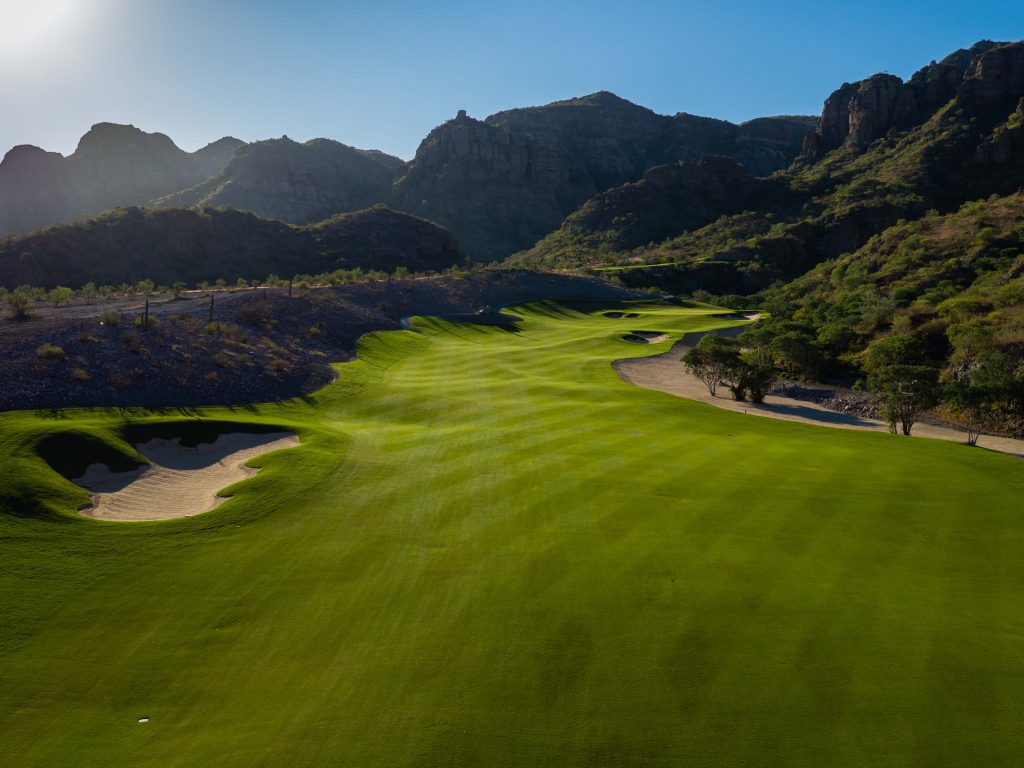

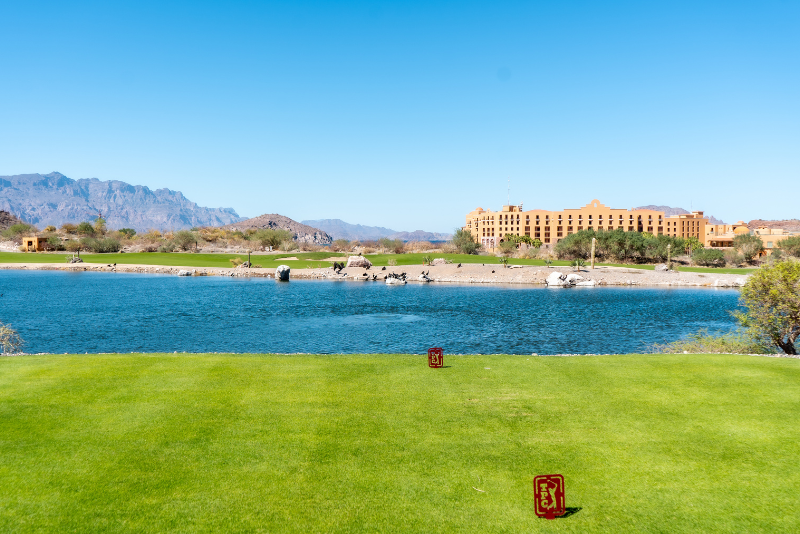
There’s a particular kind of quiet that settles over TPC Danzante Bay in the late afternoon. The Sea of Cortez shifts from bright turquoise to something deeper and more dramatic. The desert hills go warm and orange as the sun drops behind the mountains. And somewhere around the 16th hole, you start to realize you’ve stumbled into one of the most beautiful windows of the day to be alive and outside with a golf club in your hand.
Playing a round that finishes at sunset here isn’t an accident. It’s a choice, and it’s worth making deliberately.
Why Late Afternoon Tee Times at TPC Danzante Bay Are Different
Most golfers think about tee times in terms of convenience or pace of play. Book early, beat the heat, get it done. And honestly, the early morning rounds here are stunning too. The first tee time goes out at 7:30 a.m., just after sunrise, when the light over the Sea of Cortez is soft and calm, and the course feels completely at peace.
But the late afternoon slots set up something else entirely.
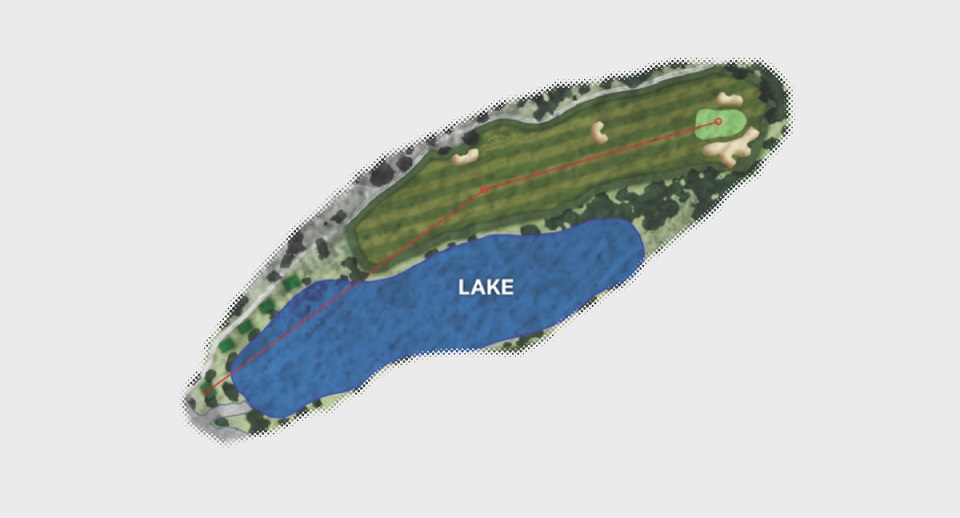
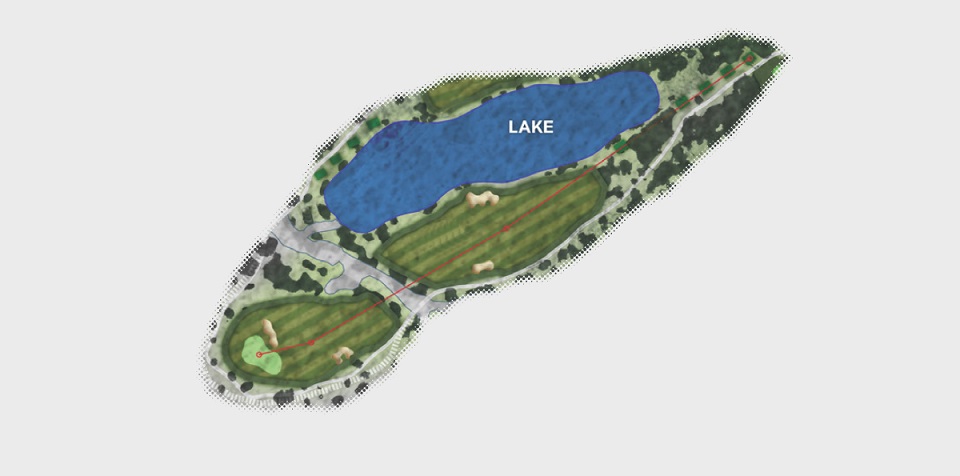
Afternoon light in Loreto is unlike almost anywhere else. The angle drops, the shadows stretch across the fairways, and the entire palette of the landscape shifts. Greens that looked flat and simple in the midday sun suddenly reveal texture and contour. The Sea of Cortez, which runs along several holes of the course, turns almost metallic. If you’ve played the course before, it genuinely looks like a different place.
What are the benefits of booking a late afternoon tee time at TPC Danzante Bay?
Beyond the visual rewards, there are practical ones. The temperature in Loreto drops noticeably in the afternoon, especially from late spring through fall. Wind patterns also shift, often calming down compared to midday gusts. For recreational golfers who don’t love playing in heat, an afternoon slot is legitimately more comfortable than a 10 a.m. round in July. You’re also likely to find a more relaxed pace on the course, since late afternoon rounds tend to be less crowded than morning slots.

What Time Should You Start to Finish at Sunset?
This is the question most people get wrong, and it matters.
Sunset in Loreto shifts throughout the year, from roughly 5:30 p.m. in December to around 7:15–7:30 p.m. in the summer months. A full 18-hole round at TPC Danzante Bay typically takes about 4 to 4.5 hours for most groups.
If you want to finish at or just before sunset, here’s a simple rule of thumb: take the sunset time for your day and subtract about 4 hours and 30 minutes. That gives you a reliable target tee time.
For example, on a summer evening when the sun sets around 7:30 p.m., a mid-to-late afternoon tee time puts you on the final holes right in the heart of golden hour. In winter, when the sun sets closer to 5:30 p.m., you’ll want to head out earlier in the afternoon if a sunset finish is the goal.
A few variables are worth keeping in mind: group size affects pace, walking versus riding makes a difference, and from December through February, daylight is more limited, so timing becomes more important. Checking the approximate sunset time for your travel dates is a simple step that can make a big difference in your experience.

How the Changing Light Affects Your Game
This is something most golfers don’t think about until they’re standing over a 150-yard approach shot and the sun is at a low angle directly in their line of sight.
How does changing light affect distance perception on the course?
As the sun drops toward the horizon, shadows lengthen dramatically across fairways and greens. This changes depth perception more than most golfers expect. Bunkers that sit in shadow can look either deeper or shallower than they are. Elevation changes become harder to read visually. Greens that are backlit by late sun can flatten out completely, making break difficult to judge.
The practical adjustment: trust your yardage more and your eyes less in the final four or five holes. If you have a laser rangefinder or a GPS watch, lean on it harder during the back nine on a twilight round. Visual cues that work perfectly at 10 a.m. become unreliable as the sun drops.
Does cooling temperature in the late afternoon affect ball flight?
Yes, and it’s worth knowing the direction of the effect. As temperature drops, air becomes slightly denser, which creates marginally more resistance on the ball. In practical terms, most golfers lose a small amount of carry distance in cooler, denser air, somewhere in the range of 2 to 5 yards depending on the temperature swing and the specific shot.
In Loreto, where afternoons can cool from the low 90s to the mid 70s between June and August, this is noticeable if you’re dialed in to your distances. The offset is that cooler temperatures tend to mean you’re swinging more freely and consistently than during heat.
Most recreational players actually hit the ball more solidly in the late afternoon than in midday heat, which more than compensates for any density difference.

Photographing TPC Danzante Bay at Sunset: What Actually Works
TPC Danzante Bay during golden hour is one of the most photogenic golf settings in North America. The desert hills, the ocean, the low Baja light hitting the fairways at that angle, your phone is going to work hard to keep up with what your eyes are doing. Here’s how to give it a fair shot.
What are the best tips for capturing a golf course sunset on your phone?
The single most useful thing you can do is stop shooting toward the sun. It sounds obvious, but the reflex is to point your camera at the most dramatic part of the sky. When you do that, everything in the foreground goes dark and muddy. Instead, position yourself so the sunset is behind you or off to one side, and shoot the course with that warm light falling across it. The fairways, the greens, the rocky terrain look extraordinary when they’re lit from the side.
The second thing worth knowing: the best light isn’t actually at the moment of sunset. It’s in the 20 or 30 minutes before the sun touches the horizon, when shadows are long and everything has that golden warmth without the harsh contrast. If you’re going to stop for a few photos during your round, the stretch between holes 14 and 17 tends to offer the widest views toward the water. That’s where most of the genuinely great shots happen.
And don’t put your phone away the minute the round ends. The sky here often gets more interesting in the 10 to 15 minutes after the sun disappears behind the mountains, when the horizon turns pink and purple and the Sea of Cortez picks up those colors from across the water. That’s the shot most people miss because they’re already walking back to the clubhouse.
What Happens If It Gets Too Dark to Finish?
This is a real question and a reasonable one, especially for players booking afternoon tee times in December or January.
The course staff at TPC Danzante Bay will let you know if conditions are becoming a concern. The team monitors late afternoon groups and pace of play specifically with this in mind. If a group is running behind and light is becoming a genuine issue, the standard approach is to complete the hole you’re currently playing and record the result as your official finish.
In practice, complete darkness after sunset doesn’t arrive instantly. Usable light typically lasts 20 to 30 minutes after the sun fully drops below the horizon. For most groups maintaining a reasonable pace, finishing 18 holes before that window closes is entirely achievable in months when sunset falls after 6:30 p.m. In winter months with earlier sunsets, it’s worth keeping a brisk pace or considering whether an earlier tee time is a better fit.
The caddie team here knows the course’s light behavior intimately. Don’t hesitate to ask when you check in.
The Part That’s Hard to Put Into Words
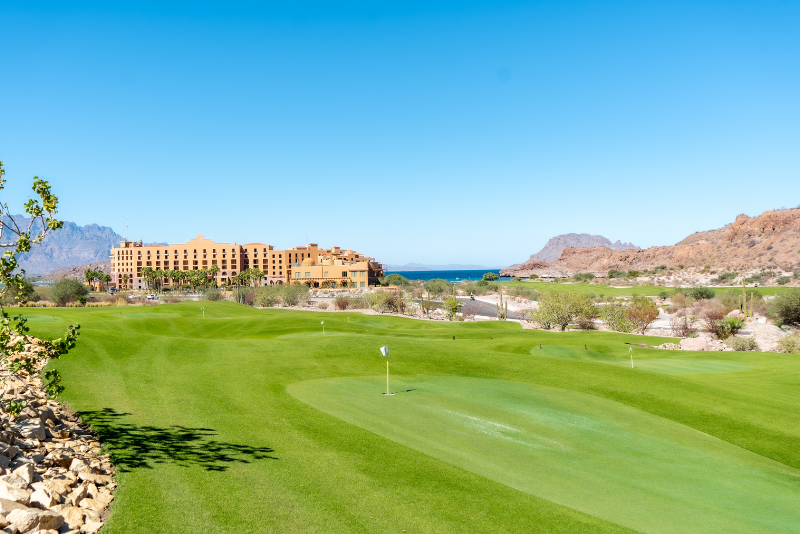
Some experiences are better felt than described, and a Loreto sunset from the 18th green at TPC Danzante Bay is one of them. The moment after the round ends, when you’re holding a cold drink and the sun is disappearing behind the mountains while the Sea of Cortez catches that last light in front of you, is genuinely one of those golf memories that stays with you.
TPC Danzante Bay is already a destination course. The design, the setting, the conditioning, all of it earns its reputation. But the late afternoon round is the format that most often produces the kind of day people talk about years later. Not just because of the golf. Because of where and when it happened.
If you’ve got the flexibility on your travel itinerary, save at least one afternoon for this. Then trust the light to do its part.
Ready to plan your round? Check available tee times for your dates here and explore caddie service options to make the most of your sunset experience.
Please note that afternoon tee time availability and last booking windows may vary depending on the season and course schedule. We recommend confirming the latest available times when you book.