
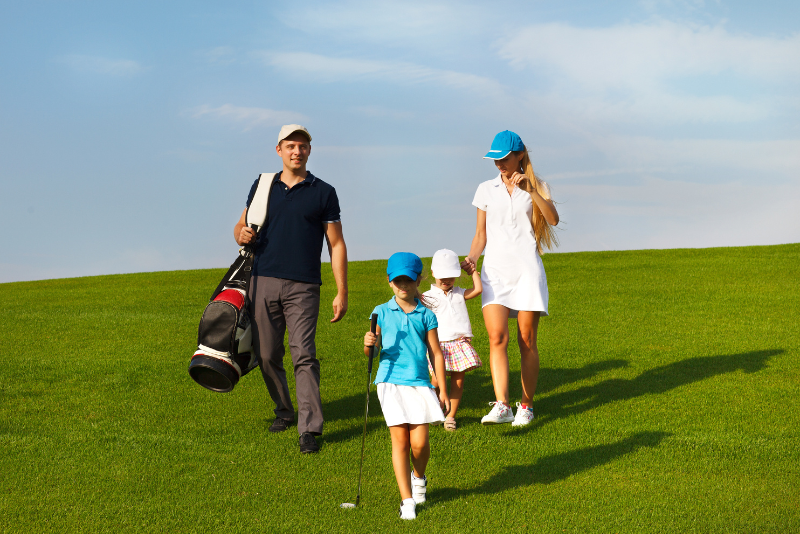
Golf isn’t always an easy sport to introduce to kids. It can be slow, quiet, and sometimes frustrating—even for adults. But when families approach it with the right expectations, golf can become something rare: an activity where parents and kids genuinely spend time together, learning as they go.
For many families, golf starts small. A few holes instead of a full round. More walking and talking than perfect swings. Less focus on score, and more focus on being outside together. Over time, those simple moments are often what turn golf into something kids actually want to come back to.
If you’re thinking about golf with kids, whether at home, at a local course, or as part of a family golf vacation, this guide answers the questions most parents have before getting started.
Why Golf Is One of the Best Sports for Families
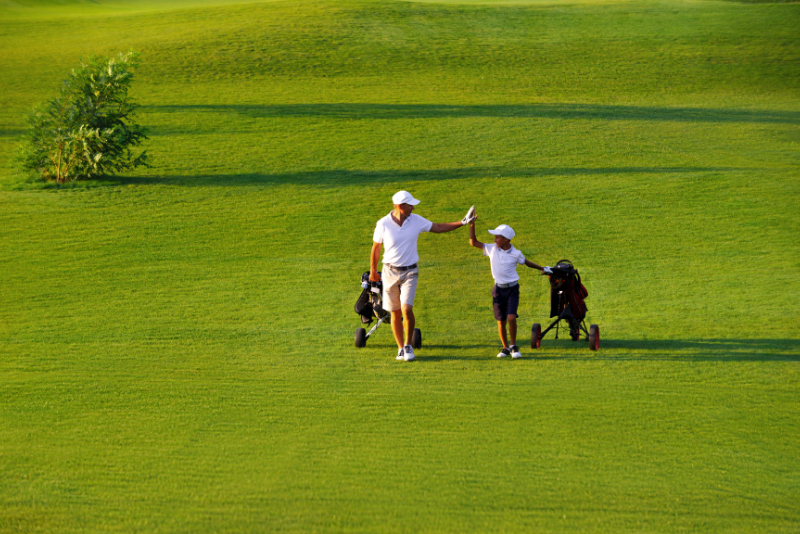
Golf offers something rare: space. Space to talk, to walk, to laugh, and to learn without rushing. Unlike fast-paced team sports, golf naturally slows everyone down.
Families who learn golf together often notice that:
- Kids develop patience, focus, and emotional control
- Parents stay present instead of watching from the sidelines
- Everyone participates at their own skill level
- Time outdoors replaces screen time naturally
Golf becomes less about competition and more about shared experience, making it one of the most rewarding family-friendly sports available.

What Is the Best Age for a Child to Start Playing Golf?
There’s no single “right” age, but most children can begin exploring golf between ages 4 and 7. At this stage, the goal isn’t mastering technique, it’s building curiosity and comfort.
Younger kids benefit most from:
- Short, playful sessions
- Putting and chipping games
- Lightweight clubs sized for their height
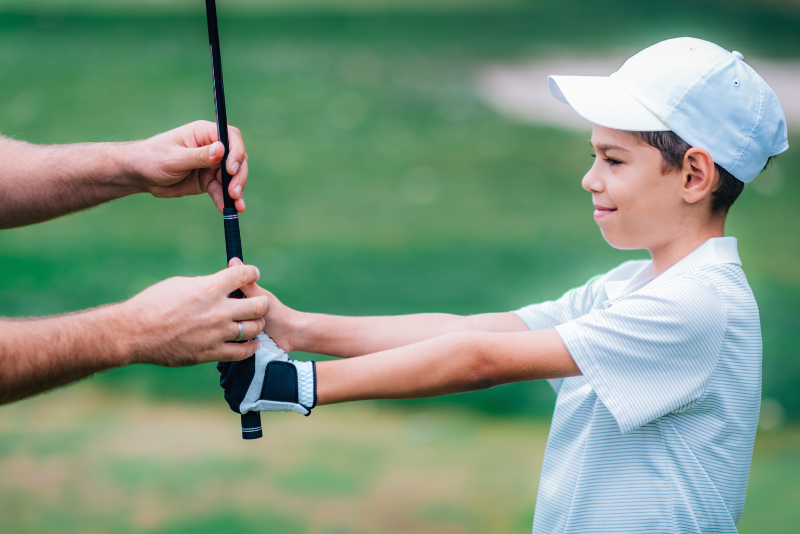
Older kids (8–12) often gain coordination and patience quickly, making it easier to introduce basic swing mechanics and simple rules. The most important factor isn’t age, it’s whether the experience stays fun and pressure-free.
How to Keep Kids Engaged During a Round of Golf
One of the biggest concerns parents have about golf with kids is attention span. A full 18-hole round can feel long even for adults.
To keep kids engaged:
- Play 9 holes or fewer
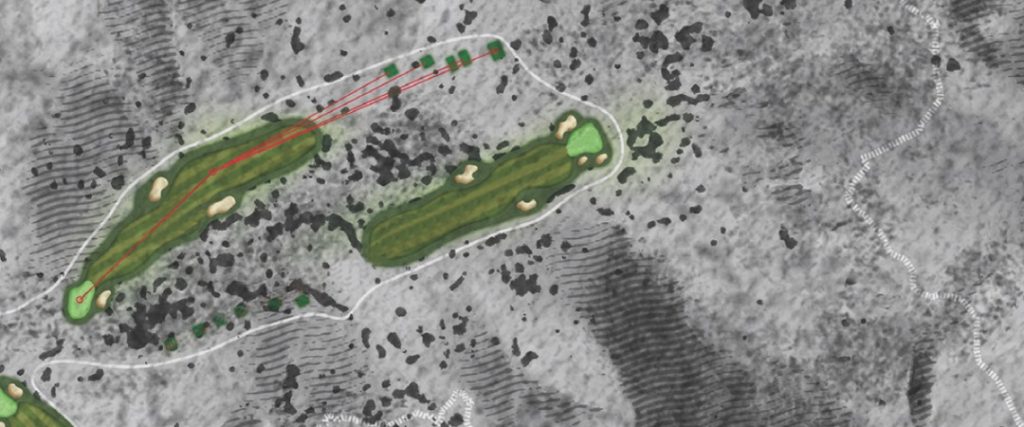
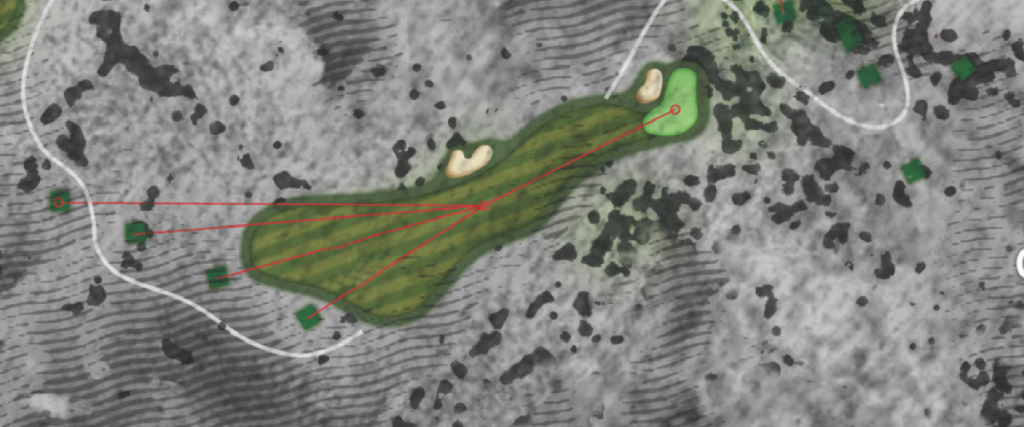
- Let kids tee off closer to the green
- Turn holes into small challenges instead of focusing on score
- Schedule snack and water breaks
- Celebrate effort, not results
Flexibility is key. When kids feel encouraged instead of corrected, they’re far more likely to enjoy the game and want to come back.
What Equipment Does a Family Need to Start Playing Golf?
Getting started with golf doesn’t require expensive gear. Simple, comfortable equipment works best—especially for kids.
- To begin, families should have:
- Junior clubs matched to the child’s height
- Comfortable athletic shoes (golf shoes are optional at first)
- Sun protection: hats, sunscreen, water
- Soft practice balls for home or driving range use
- As interest grows, equipment can be upgraded. Early on, comfort and confidence matter far more than brand names.
Are All Golf Courses Family Friendly?
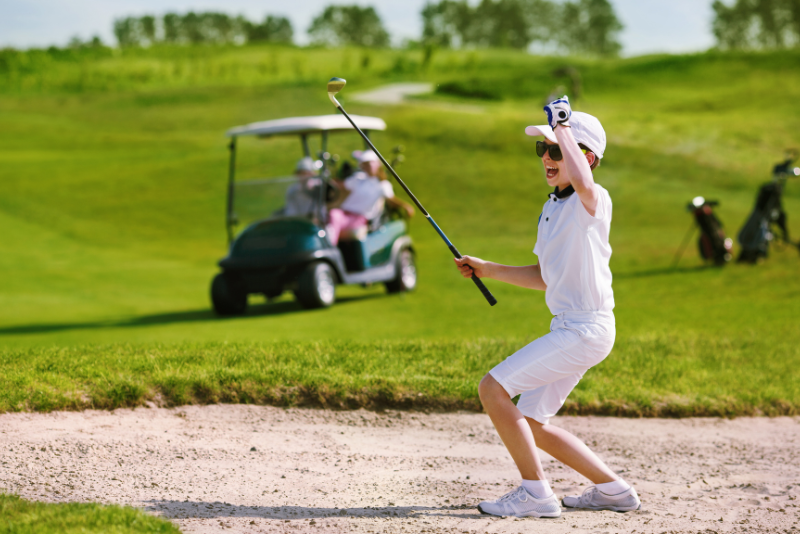
Not all golf courses are equally welcoming to families. Some professional or championship-level courses prioritize speed, strict rules, or advanced play.
Family-friendly golf courses usually offer:
- Flexible pace-of-play expectations
- Practice areas or short courses
- Staff who welcome beginners
- Junior tee boxes
Before booking tee times, it’s helpful to check whether children are allowed and whether the course encourages junior players. A welcoming environment can completely shape a child’s first experience.
Basic Golf Etiquette Rules Kids Should Learn First
Golf etiquette doesn’t have to feel intimidating. Kids only need a few core principles to start confidently.
The most important etiquette rules to teach first:
- Be quiet when others are hitting
- Don’t run on putting greens
- Take care of the course and equipment
- Wait your turn and be aware of others
Learning these basics helps kids feel comfortable and respected on the course—and builds habits that last beyond golf.

Common Mistakes Parents Make When Golfing With Kids
Even well-intentioned parents can accidentally make golf feel stressful. Avoiding these common mistakes makes a huge difference.
Some pitfalls to watch for:
- Expecting kids to complete a full 18 holes
- Correcting every swing or mistake
- Making score the main focus too early
- Forgetting snacks, shade, or rest breaks
- Choosing overly strict or fast-paced courses
Golf should feel like an invitation, not an obligation. Keeping expectations realistic helps kids associate the game with enjoyment rather than pressure.

Why Family Golf Vacations Work So Well
Golf naturally fits into family travel. It allows parents and kids to enjoy the same activity while still leaving room for relaxation and exploration.
Family golf vacations work because they:
- Combine outdoor activity with downtime
- Offer flexible schedules
- Allow different skill levels to play together
- Create shared memories instead of split itineraries
Whether it’s a short trip or a longer getaway, golf adds structure without stress, making it an ideal activity for families traveling together.
Family Golf Starter Checklist
Before heading to the course, a little preparation goes a long way.
Family Golf Essentials:
- Junior clubs sized correctly
- Sunscreen, hats, and water
- Snacks and breaks planned
- Flexible expectations
- A course that welcomes beginners
This simple checklist helps ensure everyone enjoys the experience from the first tee to the last green.
Frequently Asked Questions About Golf With Kids
What is the best age for a child to start playing golf?
Most kids can start experimenting with golf between ages 4 and 7, but interest and attention matter more than age. Some kids are ready earlier, others later—and that’s normal.
How long should a golf session be for kids?
Most kids do best with 6–9 holes or short practice sessions lasting 60–90 minutes.
Is golf safe for young children?
Yes, when supervised properly and played with awareness. Teaching safety and spacing early is important.
Do kids need lessons before playing on a course?
Lessons can help, but they aren’t required. Many kids start with casual play and learn as they go.
How can I keep my kids engaged during a full round of golf?
Shortening the round, allowing closer tee positions, taking snack breaks, and removing pressure around scorekeeping all help kids stay interested longer.
Is there specific equipment my family needs to start playing?
At the beginning, families only need properly sized junior clubs, comfortable shoes, and sun protection. Expensive gear is not necessary.
Is golf safe for young children?
Yes, as long as basic safety rules are followed, such as standing clear of swings and staying aware of other players.
How do I know if my child actually enjoys golf?
If they ask to go back, enjoy practice games, or talk about shots they made, those are good signs. If not, it may just not be the right time, and that’s okay.
How often should kids play golf?
Once or twice a month is enough at first. Consistency matters more than frequency, especially when kids are still deciding if they enjoy the game.
Is golf better as a competitive or recreational activity for kids?
Most kids benefit from starting recreationally. Competition can come later if interest grows, but early pressure often leads to burnout.
Can golf really work as a family activity if skill levels are very different?
Yes. Golf allows each person to play from different tees and at their own pace, which makes it one of the few sports where mixed skill levels can play together.
What if my child loses interest halfway through a round?
That’s normal. Ending early, skipping holes, or switching to putting games keeps the experience positive rather than forcing it.
Final Thoughts: Keep It Simple, Keep It Fun
Family golf doesn’t need to be perfect to be meaningful. There will be missed shots, slow holes, and moments of distraction, but those aren’t failures. They’re part of the experience.
Years from now, kids won’t remember their scorecards. They’ll remember walking the course together, laughing between shots, and feeling included in something special.
That’s the real value of learning golf as a family.